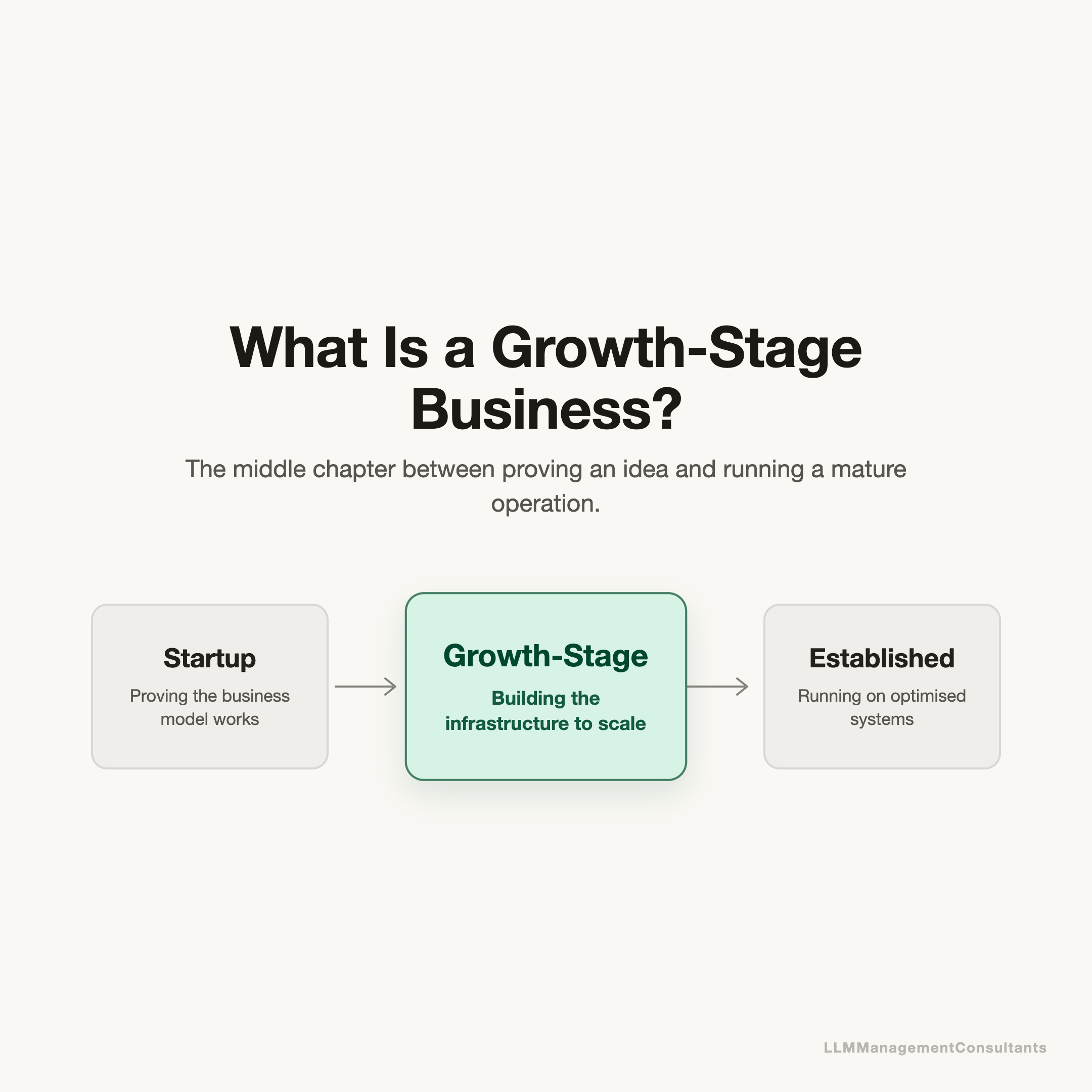
Growth does not always require external capital. Sometimes, the capacity to grow already exists within the business, but the structure to unlock it does not.
Growth creates opportunity, but it also places new demands on the systems, people and financial structures supporting a business. The question is not only whether your business can grow, but whether it is built to sustain that growth.
There are few things more frustrating than watching a business someone has worked hard to build begin to struggle under the weight of its own growth because the infrastructure required to support that growth did not evolve with it.
A business built to manage P2 million in annual revenue may not necessarily be equipped to manage P10 million. The processes that worked with five employees may not work with twenty. The founder who could once personally oversee every significant decision eventually becomes a bottleneck. The accounting information that was sufficient when the business was smaller may no longer give management the insight it needs to make increasingly complex decisions.
Growth has a multiplier effect. It can amplify the good just as well as the bad.
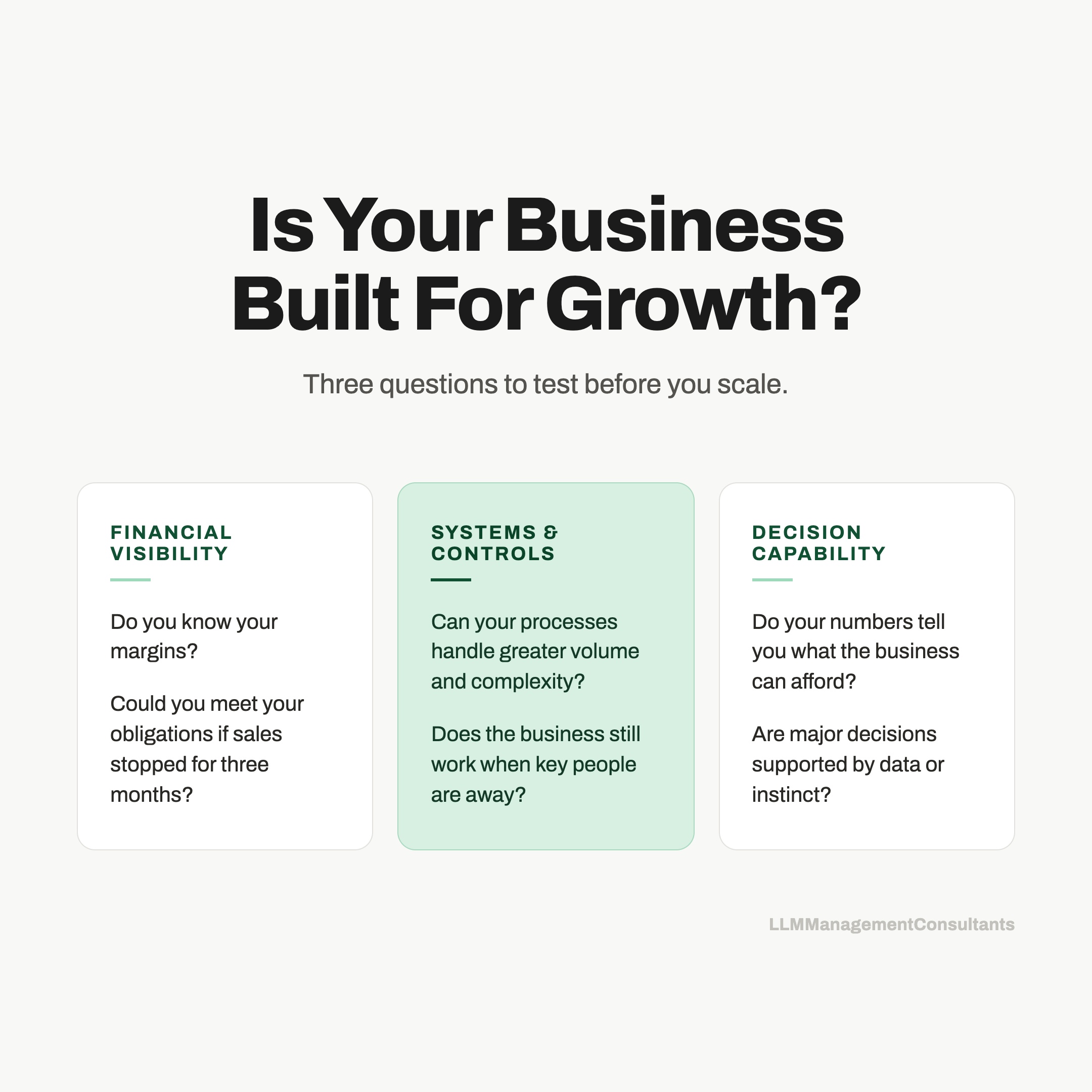
So, how do you know whether your business is built for what comes next?
1. Visibility: Can you see?
Management needs to understand what is happening beneath the headline numbers: which products, services or customers are actually driving profitability, what is happening to margins, how efficiently profit is being converted into cash, where cash is being tied up, and whether the business could keep meeting its obligations if sales stopped for the next three months.
Reliable financial information allows management to identify changes in performance early, understand what is driving them, and respond before small problems become expensive ones.
Red flags include: revenue is increasing, but cash is becoming tighter, or management cannot readily explain performance in terms other than bank balance.
2. Systems & Controls: Can you handle?
Many businesses begin with relatively informal processes, and at that stage, they may work perfectly well. The founder approves most expenditure. One employee understands how everything works. Information moves through WhatsApp, email and spreadsheets. Processes are not documented because everyone involved already knows what needs to happen.
Growth tests those arrangements. More customers create more transactions. More employees create more responsibilities. More suppliers, assets and locations create more opportunities for errors, duplication and loss of control. The question becomes whether the structures supporting the business can absorb that additional complexity across finance, operations, people and decision-making.
Red flags may include: Important processes depending heavily on one individual, or management spending increasing amounts of time resolving issues that should be prevented by process.
Good structure is not about introducing bureaucracy for its own sake. It is about ensuring the business can become larger without becoming difficult to control.
3. Decision Capability: Can you decide?
Growth brings bigger decisions. Should we hire? Can we afford another branch? Which product or service should we discontinue? Should we purchase the equipment? Can we take on this contract? How much capital will the expansion require?
At a smaller scale, some of these decisions can be made largely through experience and intuition. As the amounts involved become more significant, the cost of getting them wrong increases.
A business built for growth should therefore have financial information that does more than record what has already happened. It should help management assess what could happen next — how much capital a decision will require, when that capital will be needed, how long it will take to generate returns, and what happens if growth takes longer than expected. Budgets, forecasts, scenario analysis and financial modelling allow management to understand the potential impact of a decision before committing resources to it.
Red flags may include: approving significant investments without modelling their financial impact, or the business having no forward-looking cash-flow forecast.
Importance Of Structure
Growth conversations often lead naturally to conversations about capital. But not every business will need an investor, bank facility or other form of external funding to reach its next stage. A well-structured business is also better positioned to grow organically.
Structure creates capacity for growth. Why? Because better visibility allows management to identify where the business actually makes money. Stronger systems reduce the time and resources lost to recurring operational problems. Better controls protect cash and assets. Forward-looking financial information allows capital to be directed toward the opportunities most likely to generate a return. In other words, the business becomes better at using the resources it already has.
A business that remains perpetually reactive — solving today's cash problem, rebuilding processes only once they break, hiring after capacity has already become constrained, and making decisions without a clear view of their financial consequences — has a significant amount of management capacity consumed simply by figuring things out as the business goes.
As a business grows, its financial visibility, systems, controls and decision-making capability need to grow with it. Because sustainable growth is not only about creating more opportunity, iis about building a business capable of carrying it.
Whether the next stage is funded by an investor, a lender or the business's own cash flows, the underlying question remains the same: is the business built to handle what comes next?
LLM Management Consultants helps growing businesses structure and redesign their finance functions — aligning people, processes, systems, controls and reporting with the needs of the business as it evolves.
Explore our Finance Function Structuring service