Founder-led accounting may seem like a saving, but the cost shows up elsewhere.
In the early stages, founder-led accounting often makes sense. The founder knows every customer, every expense and every pula moving through the business. Cash is limited, and hiring senior finance support feels like a cost that can be postponed.
But growth changes the job.
There are more transactions to process, more customers to collect from, more suppliers to manage and more decisions competing for attention.
The finance function depends on a founder that now has less time to manage it. And even where month end reports are produced, they may not provide the insight a founder needs to manage a growing business, and important financial questions remain unanswered.
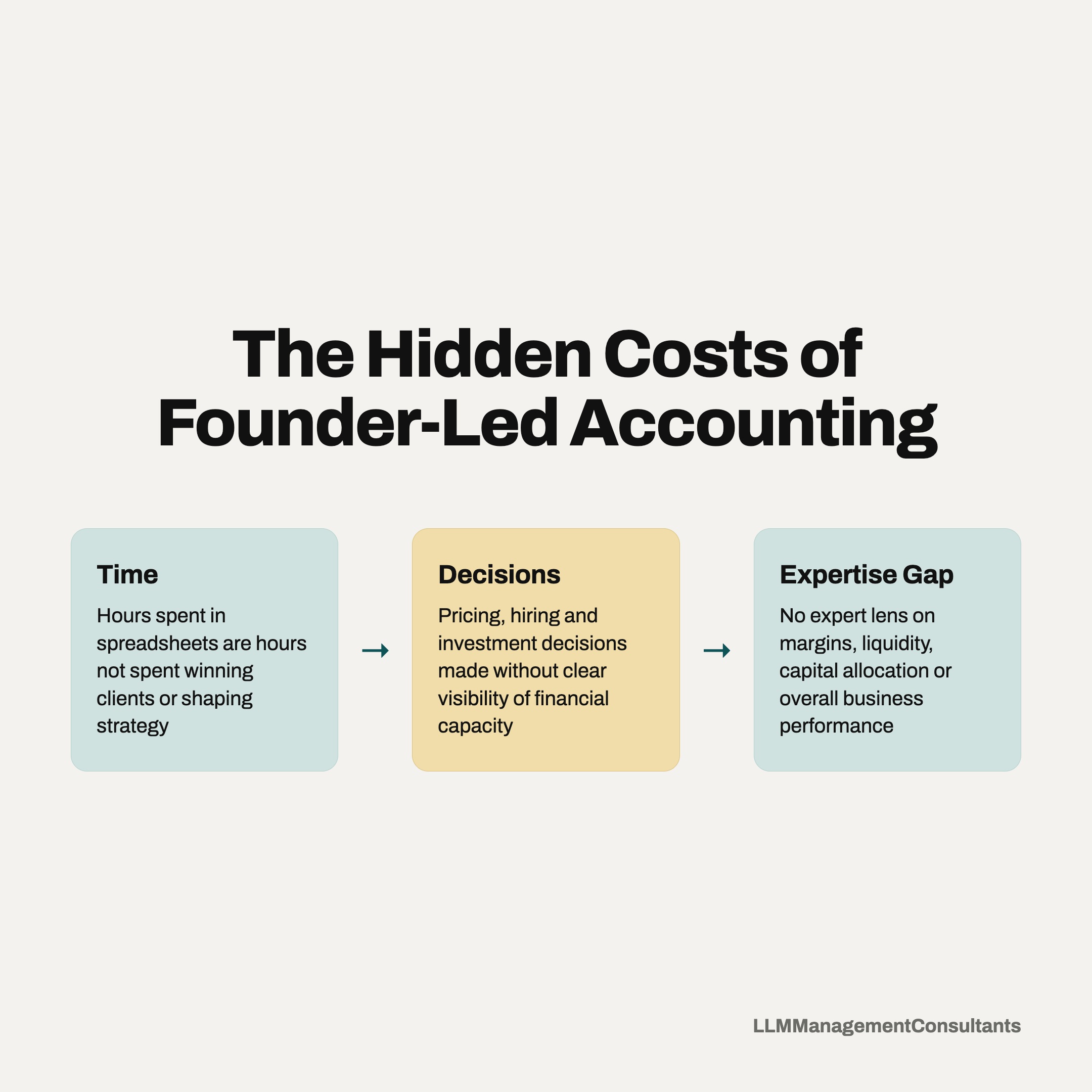
The first hidden cost is your capacity.
Every hour spent keeping financial records, reconciling accounts, and piecing together reports is an hour NOT spent winning business, developing the team, strengthening customer relationships, product development or planning the company’s next move.
The value lost is not simply the cost of your time. It is the value your time could have created elsewhere.
The second hidden cost is weaker decision-making.
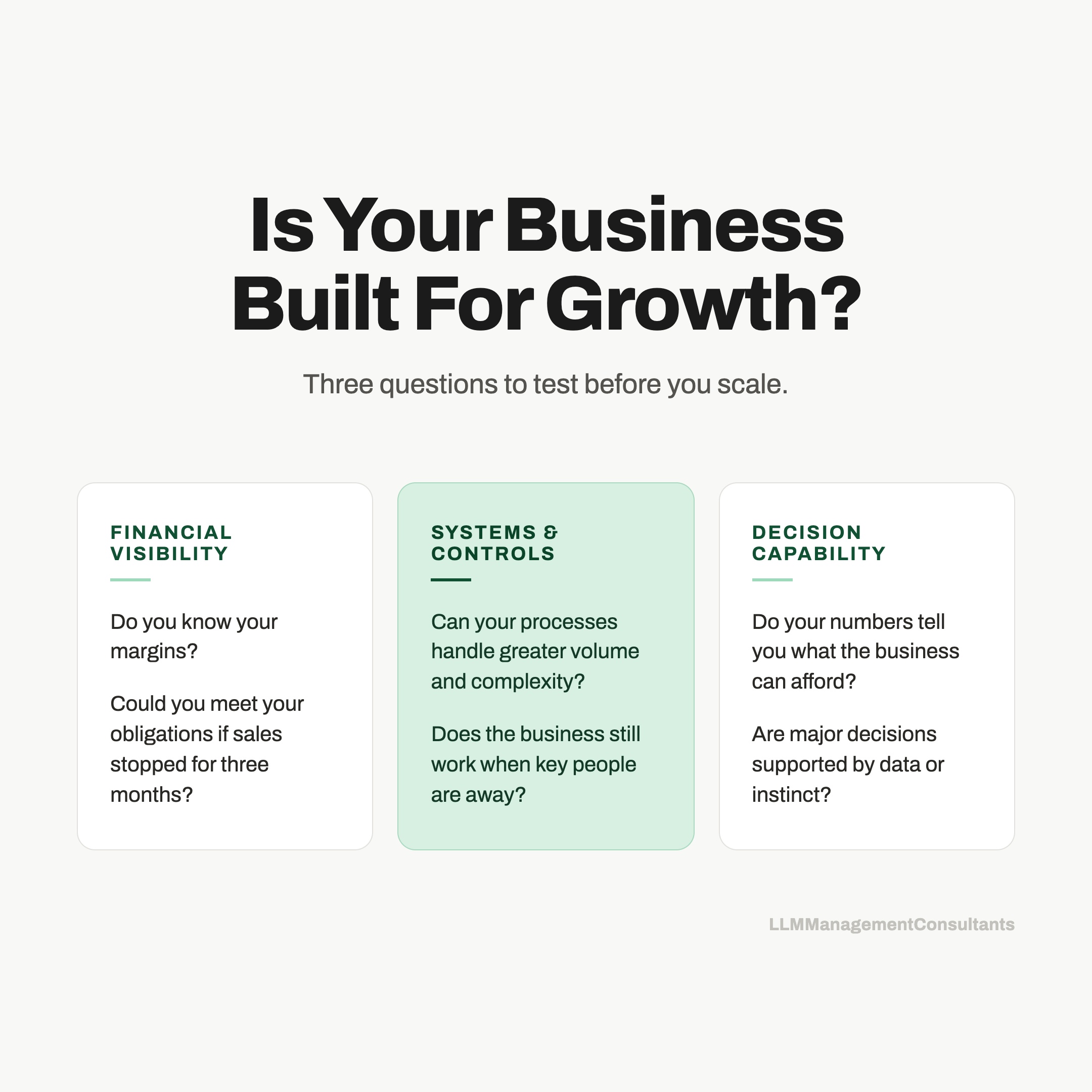
Without the right finance capability, the bank balance becomes the default decision-making tool. But a bank balance cannot show which customers are profitable, whether current cash is already committed or what obligations the business can safely meet in the next three months. Cash in the bank is a position. It is not a strategic insight.
The third hidden cost is the opportunity cost of operating without financial expertise.
Good accounting records are important, but growing businesses need more than a record of what has already happened.
Without visibility over what’s driving or eroding performance, pricing weaknesses and margin leakage can go unnoticed. Hiring may be delayed or undertaken before the business has the financial capacity to support it. Cash-flow pressure becomes a recurring nightmare and growth decisions are made without a clear understanding of their true financial impact.
By the time the business seeks professional support, the problem is often no longer just the bookkeeping.
Historical records may need to be corrected. Processes must be rebuilt. Reliable reporting needs to be established. And management needs visibility it should have had before making certain decisions.
The answer is not necessarily to hire a full-time CFO or build a large finance department.
It is to put the right level of financial support in place for the business’s current stage.
This is where LLM steps in with Fractional CFO support.
To give growing businesses access to senior financial leadership, performance insight and strategic advisory without the cost of a full-time appointment.
The goal is not to take finance away from the founder. It is to give the founder back the capacity to lead, while giving the business the financial visibility and discipline it needs to grow well.
Because as a business grows, its financial decisions become too important to depend on when the founder has time.